How Often Should You Clean Your Water Softener Brine Tank in Oak Creek WI?
Regular brine tank maintenance helps your water softener regenerate properly and can prevent salt buildup, residue, and avoidable performance problems. Learn when to clean your tank and what Oak Creek homeowners should check.
Why Your Water Softener Brine Tank Needs Cleaning
A water softener uses a brine tank to store salt and prepare the salt solution needed to recharge the resin that removes hardness minerals. Although the tank does not need constant cleaning, salt residue, dirt, and other debris can accumulate over time.
When the tank becomes dirty or develops a salt bridge, the system may not prepare enough brine for effective regeneration. You might eventually notice mineral spots on dishes, residue around faucets, or other signs that your softener is not working as expected.
For Oak Creek homeowners, regular inspection is a simple way to catch these problems before they interfere with the system's performance.
How Often Should You Clean the Brine Tank?
For many residential water softeners, cleaning the brine tank about once a year is a reasonable starting point. However, the ideal schedule depends on the manufacturer's instructions, the type of salt you use, and how much water your household consumes.
Some systems may need attention sooner if they accumulate sediment or develop recurring salt problems. Others may require less frequent cleaning when the salt stays clean and the equipment operates normally.
Rather than relying only on a calendar, inspect the tank periodically. If you notice a layer of residue, unusual debris, a persistent odor, or recurring salt buildup, check the maintenance instructions and determine whether cleaning is needed.
Signs Your Brine Tank May Need Cleaning
Dirt or Sediment at the Bottom
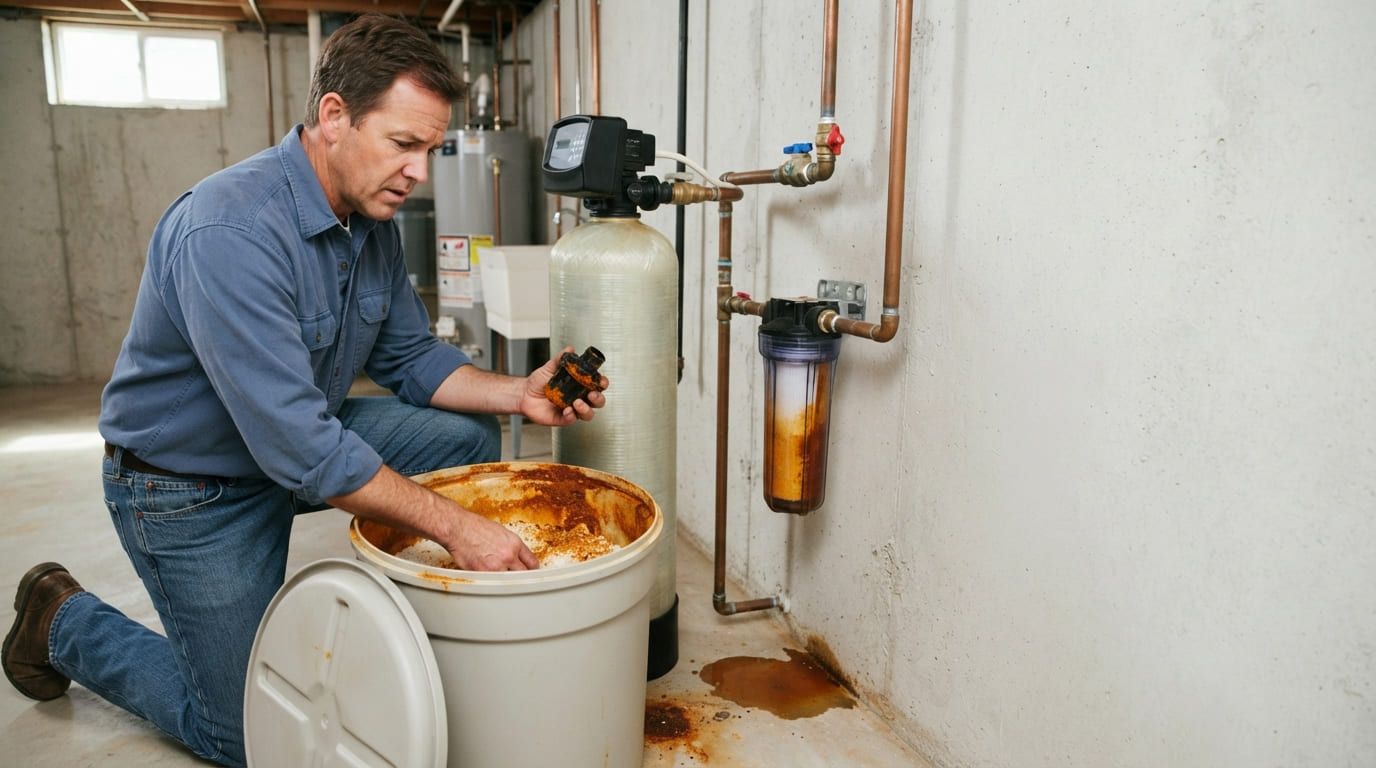
Small amounts of residue can collect in the tank as salt dissolves and the system operates. If you see substantial sediment or a layer of sludge, the tank may need to be cleaned according to the manufacturer's recommendations.
Salt That Will Not Dissolve Properly
Salt can sometimes form a hard crust or bridge above an empty space. The tank may look full even though the salt is not making proper contact with the water below. Without enough brine, the softener may not regenerate correctly.
Recurring Softening Problems
If the water starts leaving more mineral deposits or your softener struggles to maintain its usual performance, the brine tank is one place to inspect. However, these symptoms can also result from incorrect settings, a bypass valve, worn resin, or other equipment problems.
Cleaning the tank may help when residue is the cause, but it will not fix every softener issue.
How to Clean a Water Softener Brine Tank
Before cleaning, consult the instructions for your specific water softener. Some systems have components or cleaning requirements that differ from others.
Step 1: Prepare the System
Follow the manufacturer's procedure for placing the softener in the appropriate maintenance mode. If the process requires disconnecting equipment or changing valve settings, make sure you understand the instructions before proceeding.
Step 2: Remove the Remaining Salt
Remove the salt as directed by the manufacturer. If the tank contains a heavy layer of hardened salt or sludge, take care not to damage the tank, float assembly, or other internal components.
Step 3: Drain and Clean the Tank
Remove accumulated debris and clean the tank using the method and cleaning products approved for your equipment. Avoid harsh chemicals or household cleaners that could leave unwanted residue. Rinse thoroughly when the instructions call for it.
Step 4: Reassemble and Refill
Return the components to their correct positions and refill the tank with the recommended type of water softener salt. Follow the startup instructions for your model and allow the system to complete any required regeneration cycle.
If the tank is difficult to access or the equipment does not operate normally afterward, contact a qualified service technician.
How to Prevent Salt Bridges and Excessive Residue
A few basic habits can make brine tank maintenance easier.
- Use salt that is compatible with your water softener.
- Store salt in a dry place before adding it to the tank.
- Avoid filling the tank beyond the level recommended by the manufacturer.
- Inspect the salt periodically instead of waiting until the system stops softening water.
- Keep the tank area clean and follow the equipment's recommended maintenance schedule.
Salt bridges may develop under certain conditions, including humidity and temperature changes. If they happen repeatedly, review the manufacturer's troubleshooting guidance rather than continually breaking them up without addressing the cause.
What Oak Creek Homeowners Should Know About Water Softener Maintenance
Oak Creek operates its own municipal Water and Sewer Utility and treats water drawn from Lake Michigan. The city provides water quality reports for residents who want to understand their public water supply.
Even when a home receives municipal water, household plumbing, equipment settings, and individual water treatment choices can affect how water behaves inside the property. A brine tank should be maintained according to the softener manufacturer's instructions, not based solely on assumptions about the city's water.
If you are unsure whether your system needs cleaning, inspect the tank and review the maintenance guide. If you continue to notice hard water symptoms after routine care, test the water and have the equipment checked before replacing parts.
Keep Your Oak Creek Water Softener in Good Condition
Cleaning your brine tank approximately once a year, when appropriate for your equipment, can help keep maintenance manageable and reduce the risk of salt related problems. Regular inspections also make it easier to recognize when the system needs more than routine cleaning.
Oak Creek Water Softener helps homeowners in Oak Creek, WI explore water softening options and understand the maintenance needed to keep their equipment working properly. If your brine tank contains heavy residue or your water softener is no longer performing as expected, start with a careful inspection and seek professional help when needed.