How Oak Creek Water Can Affect Your Water Heater and Appliances
Learn How Hardness Minerals Create Scale, Reduce Performance, and Increase Maintenance Around Your Home
Your water heater works quietly in the background every day. It provides hot water for showers, laundry, dishwashing, and cleaning. Because the equipment is usually hidden in a basement, utility room, or mechanical area, it is easy to forget about it until something goes wrong.
The quality of the water entering the unit can have a significant effect on how well it performs. Even water that looks perfectly clear can contain calcium and magnesium that form scale when heated.
Oak Creek draws its drinking water from Lake Michigan and treats it before distributing it to the community. The municipal treatment process provides safe drinking water, but naturally occurring hardness minerals may still affect plumbing, fixtures, and water using appliances. Oak Creek Water Quality Report
Why Hot Water Creates More Mineral Scale
Calcium and magnesium remain dissolved while water is moving through the plumbing. When the water is heated, those minerals are more likely to separate and attach to nearby surfaces.
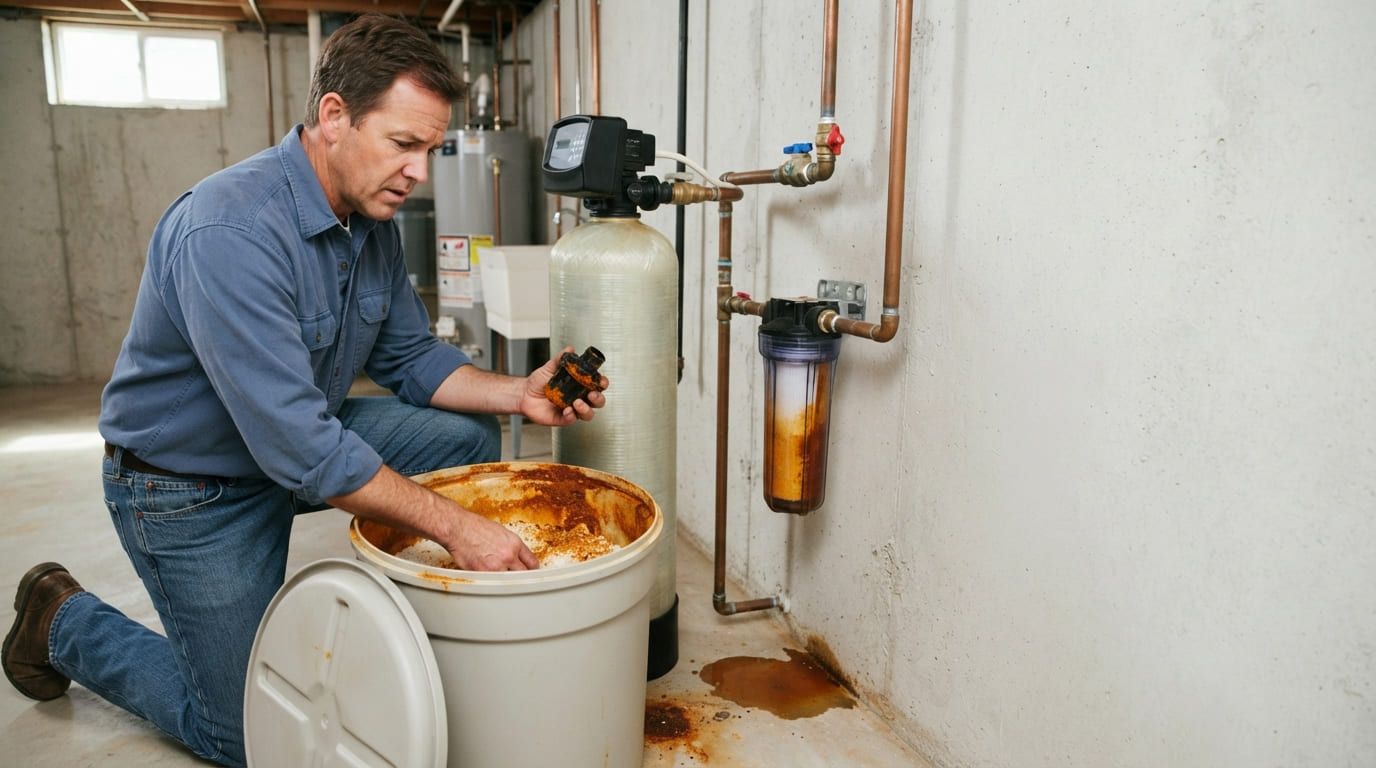
In a traditional tank water heater, mineral deposits can settle at the bottom of the tank. In an electric unit, scale may collect around the heating elements. In a tankless water heater, buildup can form inside narrow passages and around the heat exchanger.
A small amount of scale may not create an immediate problem. As the layer becomes heavier, however, it can interfere with water flow and heat transfer.
Signs of Mineral Buildup in a Water Heater
Mineral scale develops inside the equipment, so homeowners may not see the problem directly. Instead, they may notice changes in performance.
Possible signs include:
- Popping or rumbling sounds
- Less available hot water
- Longer heating times
- Changes in water pressure
- Cloudy particles in hot water
- More frequent maintenance
- Fluctuating water temperature
- An unexplained increase in energy use
These symptoms can have several causes. A professional inspection can determine whether mineral buildup, a failing component, sediment, or another issue is responsible.
How Scale Can Reduce Efficiency
A water heater works by transferring heat to the water. When scale forms between the heating surface and the water, it acts as a barrier.
The equipment may need to run longer or work harder to reach the desired temperature. This additional strain can reduce performance and contribute to unnecessary wear.
In a tank system, deposits also take up space that would otherwise hold hot water. Heavy accumulation may reduce usable capacity and make the household feel as though it is running out of hot water sooner than it once did.
A water softener helps by removing hardness minerals before the water enters the heater.
Hard Water Affects More Than the Water Heater
Any appliance that heats, sprays, or evaporates water can be affected by mineral buildup.
Hard water may create problems in:
- Dishwashers
- Washing machines
- Coffee makers
- Ice makers
- Humidifiers
- Steam appliances
- Showerheads
- Faucet aerators
- Plumbing valves
In a dishwasher, scale may collect on spray arms and interior components. In a washing machine, mineral deposits can affect valves and reduce detergent performance. Small appliances such as coffee makers may need frequent descaling because water evaporates and leaves the minerals behind.
Visible Signs Around Your Oak Creek Home
The same scale forming inside your appliances often appears on surfaces throughout the home.
Look for:
- White residue around faucets
- Cloudy spots on drinking glasses
- Scale on showerheads
- Film on glass shower doors
- Soap scum in tubs and showers
- Stiff feeling laundry
- Towels that become rough
- Reduced water flow from fixtures
- Mineral rings around sinks and drains
If these deposits return shortly after cleaning, hardness minerals are likely contributing to the problem.
How a Water Softener Protects Appliances
A traditional water softener removes calcium and magnesium through ion exchange.
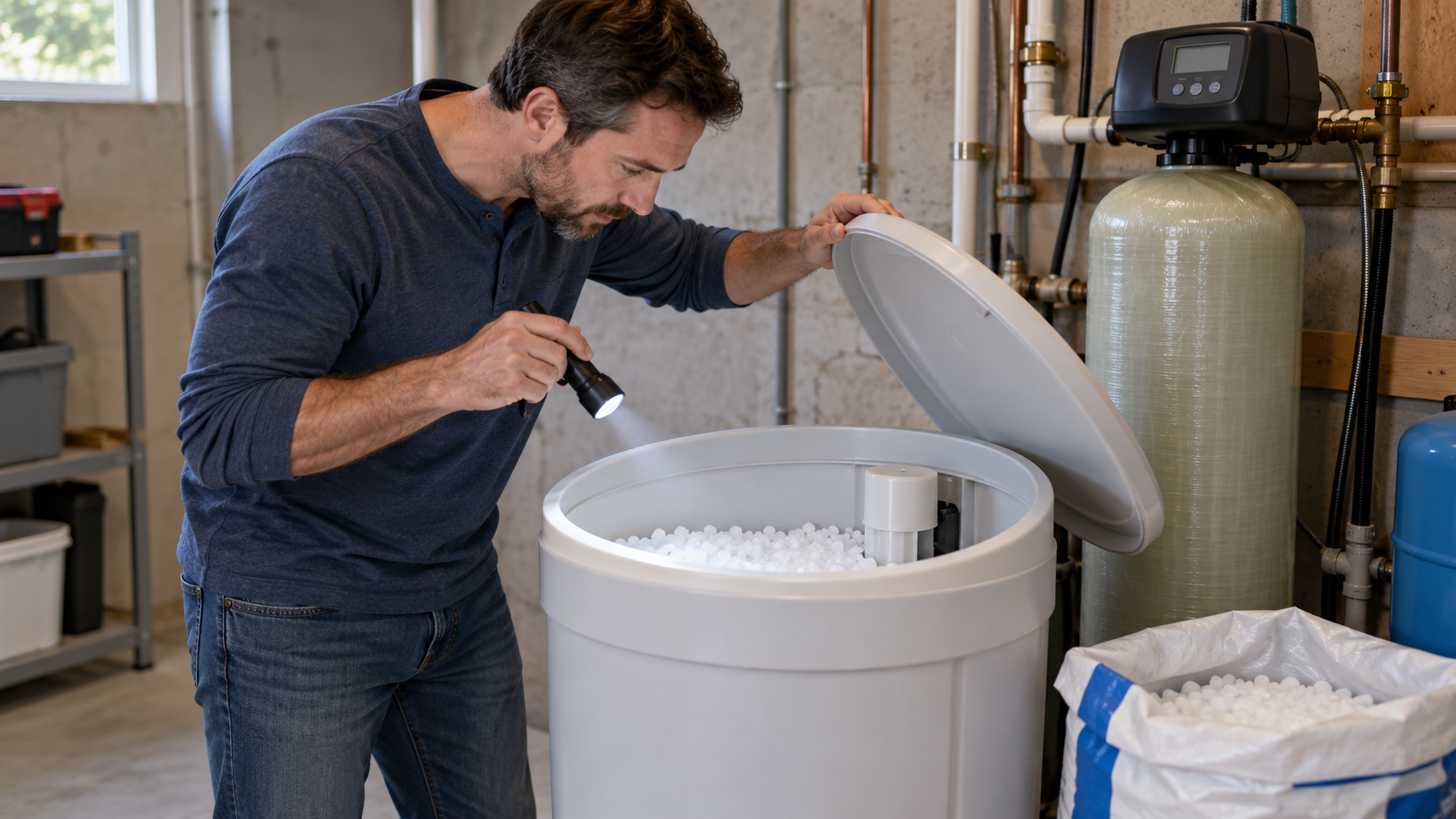
Incoming water passes through a tank filled with resin beads. The resin captures hardness minerals before the water continues to the plumbing, water heater, and appliances.
After the resin reaches its treatment capacity, the system completes a regeneration cycle using a salt solution. This removes the collected minerals and prepares the resin to treat more water.
By reducing hardness before the water is heated, a softener can help limit new scale formation.
Benefits Beyond Appliance Protection
Protecting the water heater is an important benefit, but softened water can also improve everyday tasks.
Homeowners may notice:
- Fewer spots on dishes
- Less scale around faucets
- Easier bathroom cleaning
- Better soap and shampoo lather
- Softer feeling clothes and towels
- Reduced soap scum
- Less detergent use
- Cleaner looking fixtures
Existing mineral buildup does not disappear immediately after installing a softener. Fixtures and appliances may still need to be cleaned or descaled. The softener helps prevent new deposits from developing.
Should You Flush Your Water Heater?
Routine flushing can help remove sediment and loose mineral deposits from a traditional tank water heater. The appropriate maintenance schedule depends on the equipment, water conditions, manufacturer recommendations, and household use.
Flushing can be more complicated than simply opening a valve. Hot water creates a burn risk, and older drain valves may leak or clog when disturbed. Homeowners who are uncomfortable working with the equipment should contact a qualified professional.
A tankless water heater may require periodic descaling. Always follow the manufacturer’s maintenance instructions to protect the equipment and preserve applicable warranty coverage.
Is a Water Softener the Same as a Filter?
A water softener addresses calcium and magnesium. It is not designed to remove every substance that may affect water quality.
A whole house filter can be selected to address other concerns, such as certain tastes, odors, or sediment. A reverse osmosis system provides additional filtration at a dedicated faucet for drinking and cooking.
An Oak Creek home may benefit from:
- A water softener for hardness
- A whole house filter for broader water treatment
- A reverse osmosis drinking water system
- A combination of softening and filtration
The right setup depends on the water test and the homeowner’s goals.
How to Choose the Correct Softener Size
Water softener sizing should be based on more than the square footage of the home. The system needs enough capacity and flow to serve the household efficiently.
Important factors include:
- Measured water hardness
- Number of household members
- Average daily water consumption
- Number of bathrooms
- Peak plumbing demand
- Iron levels when applicable
- Desired time between regeneration cycles
An undersized system may regenerate too frequently or allow hard water through during heavy use. An oversized or poorly programmed unit may waste salt and water.
Test the Water Before Buying Equipment
Oak Creek’s Lake Michigan water source provides useful background, but a test at your home shows what is reaching your plumbing.
A professional water evaluation can identify hardness and help determine whether an existing softener is operating correctly. It can also separate hardness concerns from taste, odor, or filtration issues.
Testing helps you avoid buying equipment that is too large, too small, or designed for the wrong problem.
Protect the Equipment Your Home Depends On
Mineral buildup does not usually cause an appliance to fail overnight. The damage develops gradually as scale collects inside the equipment and makes it work harder.
Oak Creek Water Softener provides water testing, water softener installation, whole house filtration, reverse osmosis systems, and iron filtration for homeowners in Oak Creek, Wisconsin.
Contact Oak Creek Water Softener to have your water evaluated and find a treatment system designed to protect your water heater, appliances, plumbing, and fixtures.